FAQ
Is the perforated metal bracket supposed to block light?No. This is a heat shield. It should not be positioned above the light bulb. Position it in between the light source and the alabaster stone.  |
What dimmer and lamp type should I use?The push towards higher efficiency in lighting gives us some great options but certainly hasn't simplified the choices. Dimming is not a good idea with every lamp type (ie Incandescent, Fluorescent, LED). Here is our take on the current state. If you are using incandescent lamps, adding a dimmer is worth considering. You will save energy and increase your control over light output. For compact fluorescent, the specialized equipment required for dimming will be obsolete in a few years. LED is the future, but has not hit the mainstream yet. Pros and cons for dimmers and lamp type:
-Conventional dimmer will reduce electricity consumption and will increase lamp life.
-Requires special dimmers and special dimmable lamps.
-Compatible with conventional dimmers. Our recommendation, install CFL lamps in areas that tend to remain lit for longer periods where light quality is not critical. Use incandescent lamps in areas that are frequently switched off and on, and where dimming adjustment is preferred. Give LED a try if you want to be on the leading edge of energy efficient trends in lighting. 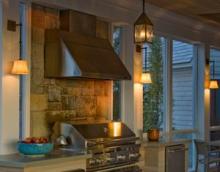 |
I have a long hallway that is only 3 feet wide and gets very little daylight. This hall is lit with two flush ceiling lights with 60 watt bulbs. The fixtures look original but I want more light. What do you recommend?First of all, sconces are out, the hallway is too narrow and besides you don't want to rewire. I recommend you use the current electrical boxes and replace each fixture with a two-light pendant. Position the pendants to run parallel with the hall. This positioning will work better for the narrow width of your hall and will spread the light throughout. This will double your light output without creating bright spots or glare. By the way, pendants generally provide better quality of light for hallways. Because the light source is brought down from the ceiling, you will benefit from greater reflected ceiling light and a larger spread of light. If you have an 8' ceiling, choose an overall length for the pendants that falls between 12" and 16". If you have a 9' ceiling, the overall length should be somewhere between 18" and 24". If you like the old hallway light fixtures, and the electrical components are in good condition, recycle by using in another area. |
Foyer Lighting: How Low Can It Go?Unless your husband or wife is a pro basketball player, follow your instincts! There is plenty of room for a decorative fixture and your foyer is an opportunity to set the tone for your entire home. Keep in mind that an eight foot ceiling in a foyer is not really unusual. Even homes with vaulted ceilings have 8' to 9' high foot entryways to create intimacy in areas designed to welcome visitors. |
Powder Room Sconces: How High?Q: I am renovating my Powder Room and my electrician asked me where to mount the electric boxes. I want the look of your Sunflower Candle Sconce placed on either side of the mirror. Any guidelines? A: I do recommend flanking a mirror with sconces rather than one atop. Practically speaking they provide an even light without shadows. Advise the electrician to place the center of the box 60 inches above the finished floor (AFF) to place the light source around face-height. Often I encounter boxes arbitrarily placed 66 - 72 inches off the floor rather than the ideal 60 inch height for a candle sconce. For horizontal placement consider the relationship to the mirror. Aesthetically, you want some visual breathing room. I recommend locating the widest part of the sconce 2 - 4 inches from the edge of the mirror. 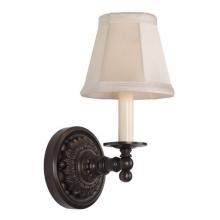 |
How To Choose A Post Light?
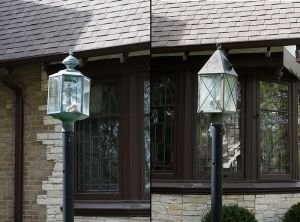
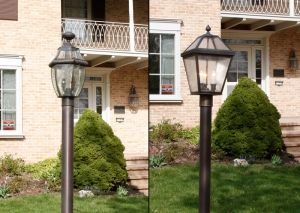
Consider the architecture of your home, whether it is a distinct period style or a blend of styles. I often recommend choosing a lantern that echos the roof pitch, general shape, or massing of the home. Note how our hand crafted Lancaster (shown right) compliments the roof line as well as gable of this French Tudor Home, circa 1920s. Scale is equally important. Determining the best size for your post will depend upon your preference, the lantern style and the surrounding architectural scale the lantern is meant to complement. Avoid the "lollipop look," when an over-sized lantern is placed too close to the ground. Equally important, avoid the "pinhead look," when too small of a lantern is placed too far off grade. Mocking up a cardboard outline of the lantern size you are considering and asking someone to hold it up at the site for your contemplation, can also prove helpful in determining scale. Consider metal finishes that either relate to exterior hardware, paint colors or brick & stone hues. Consider verdigris patina if you'd like the fixture to blend with the landscape. Give yourself, your home and your neighborhood's environment a lift by investing in the right choice for your welcoming post light on a walkway or curbside. Uncertain of style and scale? Email your pictures and dimensions -- our professional design team can guide you in the right direction.
|
Can I use LED bulbs in your fixtures?Yes! We label our fixtures with the maximum wattage for an incandescent style lamp. An LED equivalent light bulb may be used instead. |
Are your fixtures UL Listed?Yes. Our fixtures ship with label of UL listing for Luminaires. |
What kind of light bulbs do I use in your light fixtures?Almost all of our light fixtures are supplied with either medium base screw-in sockets or candelabra base screw in sockets. These sockets will accept incandescent lamps or the equivalent compact fluorescent/LED self ballasted lamp. |
|
We work with interior designers to meet their needs in order to succeed. Go to our Trade Program Application Form . |
|
No. Once your Trade application has been processed and verified you will receive a welcome email that includes your account number. Processing takes 48-72 hours. |
What metal finish options are available for my alabaster light fixture?<p>Each of our thirteen high quality metal finishes are available for the fittings of our alabaster Pendants, alabaster Chandeliers, and alabaster Wall Sconces that offer metal options such as backplates, finials, rosettes or other details. Metal finish samples may be requested from our Sales Department by calling 800-235-9595 or by emailing sales@brasslightgallery.com. |
What are the lamping options for Alabaster light fixtures?Our Alabaster pendants and wall sconces can be used with either incandescent or LED bulbs. Most light fixtures can also be specified for use with energy efficient compact fluorescent lamps. For details, please contact us at sales@brasslightgallery.com. |
Are any two pieces of Alabaster identical?No. Alabaster is a natural stone, made by nature and no two pieces are ever exactly the same. Patterning, veining, and translucency depends on what part of the quarry the alabaster was mined from. You can request that we hand select your order to make the best match, but the natural variation of genuine alabaster stone is what makes it beautiful for lighting. |
Are there standard tinting options for Alabaster Light Fixtures?Yes. Unless otherwise specified, our hand-carved alabaster bowls are supplied standard with subtle tint. Upon request, darker hand applied tint options are available. |
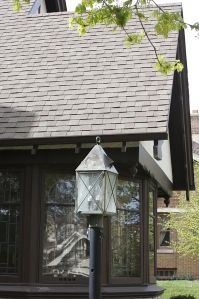 Think about style, scale, metal finish and decorative details, in that order, when choosing a post light to achieve tasteful curb appeal.